
ATOM5: 5% OFF ₹5K+ | ATOM10: 10% OFF ₹10K+ | ATOM15: 15% OFF ₹15K+ | ATOM20: 20% OFF ₹20K+
Hospital Door Lock Guide for Clinics, Wards and Patient Washrooms
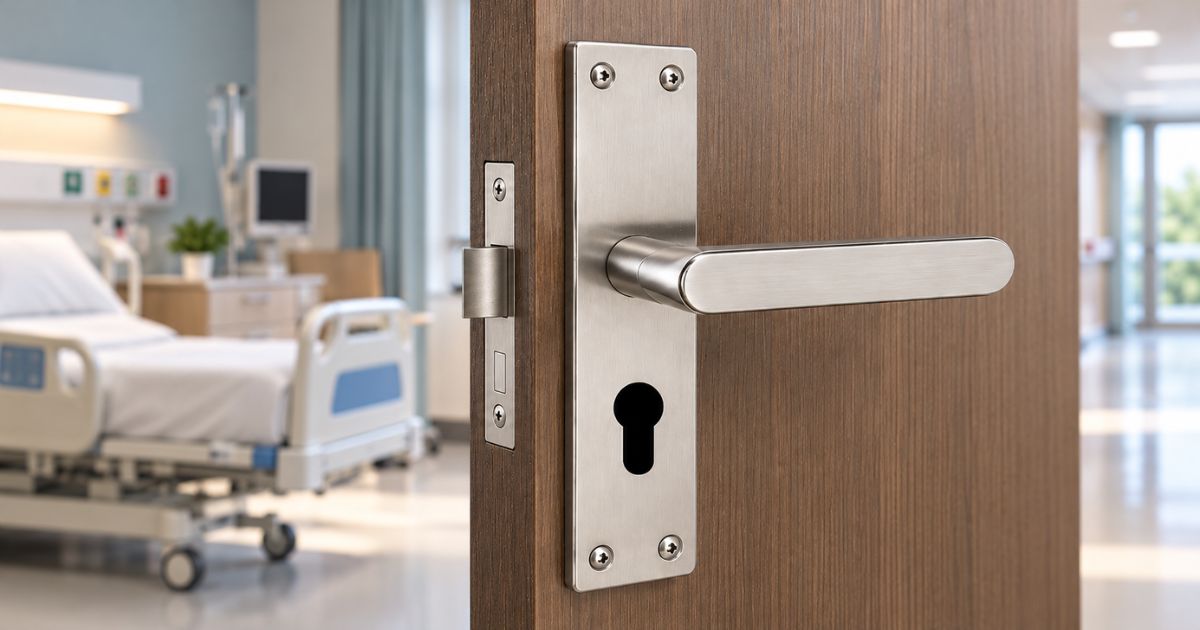
Different Rooms, Different Needs
A hospital or clinic is really a collection of very different spaces.
Consultation rooms need privacy during examinations and locking after hours to protect records and equipment.
Patient rooms and wards need doors that staff can open instantly in an emergency, Hospital Door Lock even if a patient has latched it.
Patient washrooms must never trap a patient inside. Falls in bathrooms are common, and staff need fast access.
Pharmacy and medicine stores need strong locks with tightly controlled keys, because they hold costly and sometimes sensitive drugs.
Records and accounts rooms need keyed security.
Operation theatres and ICUs usually have specialised doors, often automatic or sliding, ATOM Locks chosen with the medical equipment supplier.
Listing the rooms this way helps avoid the common mistake of fitting identical locks everywhere.
Patient Washrooms Need Special Care
This is the single most important area to get right. A patient who falls in a washroom with the door locked cannot always call for help or unlock it.
Use a privacy lock or baby latch with an emergency release from outside, so staff can open it with a coin or tool in seconds. Many facilities also use an occupancy indicator so nurses can see at a glance whether the washroom is in use.
Avoid inside tower bolts in patient washrooms. They cannot be opened from outside at all.
Choose stainless steel hardware for washrooms. ATOM Locks stainless steel bathroom set with keyless mortise handle and baby latch, the Skoda-BL, is a good example of this type of fitting.
Handles, Hygiene and Ease of Use
Hospital hardware is touched by many people with varying levels of hand hygiene, and it is cleaned with harsh chemicals.
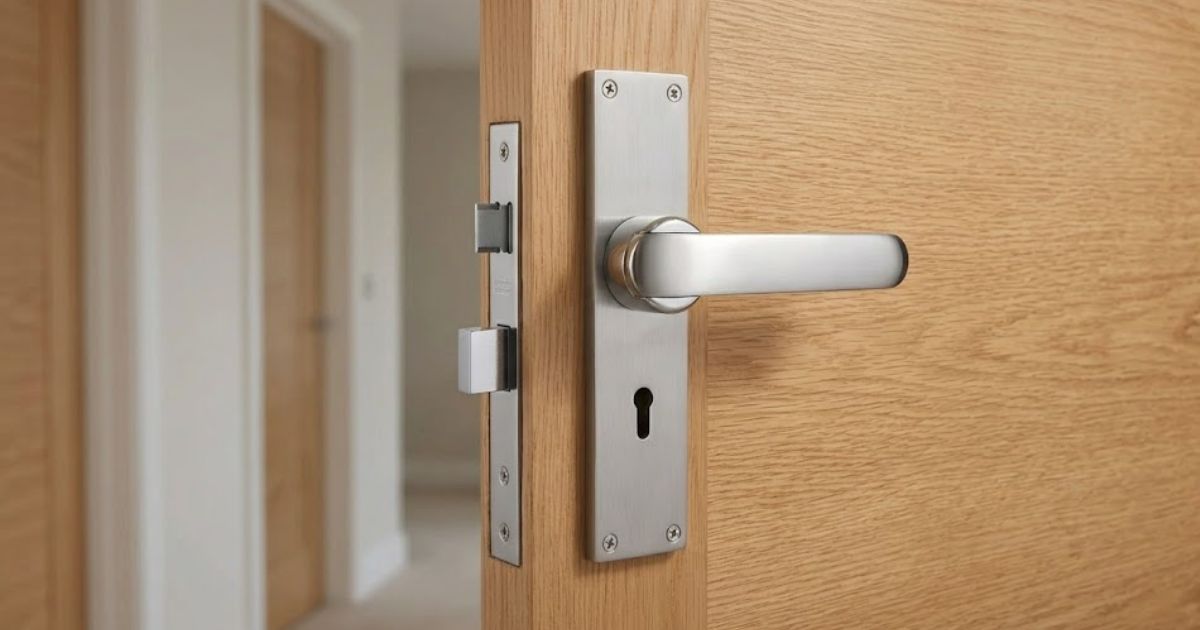
Stainless steel lever handles are the best general choice. They resist corrosion from disinfectants and are easy to wipe clean. Smooth shapes without deep grooves or carved details do not trap dirt.
Lever handles also help patients with limited grip strength and staff whose hands are full. A lever can be pushed down with an elbow, which is useful when hands are gloved or carrying something.
ATOM Locks offers SS and aluminium mortice handles that suit clinical spaces, and these can be paired with a range of lock bodies depending on the room.
Door Closers and Traffic Flow
Door closers keep doors shut, which helps with infection control, noise and air conditioning. In corridors and consultation rooms, they also maintain privacy without staff having to think about it.
Choose closers matched to door weight. Too strong and the door becomes hard for patients to open. Too weak and it does not latch. Adjustable closers allow the closing speed to be slowed down so that the door does not swing into elderly patients or children.
For doors that need to stay open during busy hours, such as ward entrances, a closer with a hold-open function or a door stopper is useful.
Choosing a Hospital Door Lock by Room
Consultation room. Mortise lock with lever handle, keyed from outside, with an inside privacy turn.
Patient room. Latch or privacy lock with emergency release. Avoid locks that need a key from inside.
Patient washroom. Baby latch or privacy lock with outside release, stainless steel handles.
Pharmacy and medicine store. Strong multi-lever mortise lock or dead lock, with a key register.
Records room. Keyed mortise lock, limited key holders.
Staff rooms and pantry. Simple latches and door closers.
Fire safety and evacuation
Hospital door locks carry a special duty in emergencies because many patients cannot move quickly. Corridor and ward doors on escape routes should open with a simple push or lever action, never with a key. Keep escape route doors free of padlocks during working hours, and make sure night staff know where the keys for any locked exits are kept. A short drill twice a year, where staff practise opening every exit door, often reveals a stiff lock or a blocked bolt before it matters.
Key Control in Medical Settings
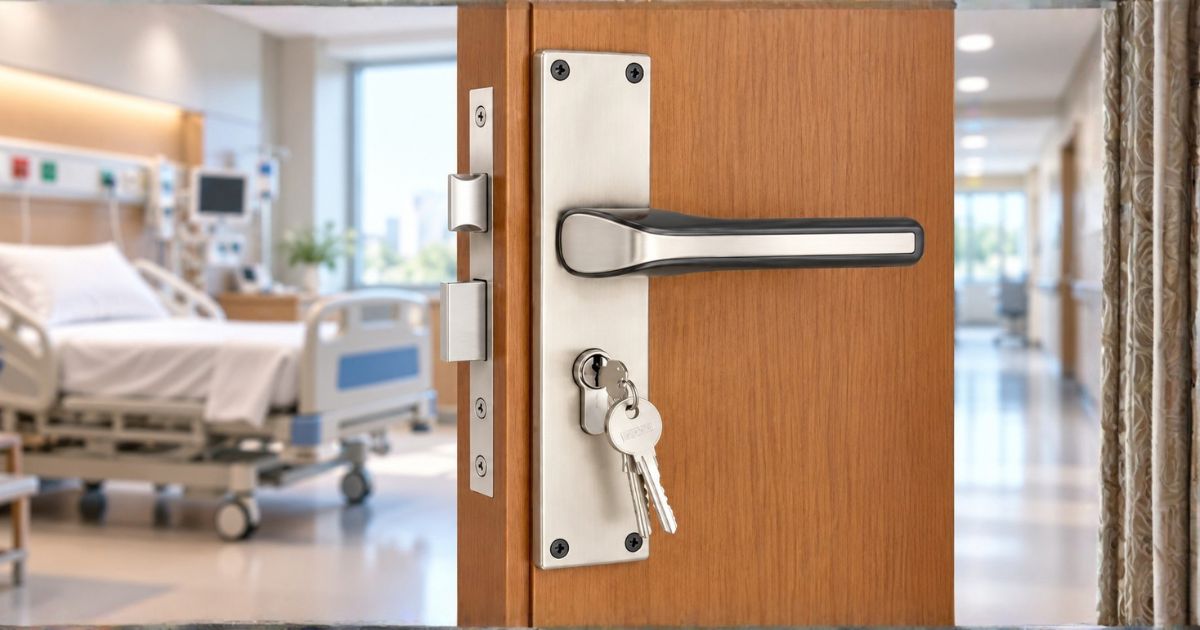
Keys in a hospital pass between shifts, departments and sometimes temporary staff. Without control, they quickly get lost or duplicated.
● Keep a key register at the nursing station or administration desk.
● Store spare keys in a locked key cabinet.
● Limit pharmacy keys to the pharmacist and one senior staff member.
● Change locks when keys go missing from sensitive rooms.
Conclusion
The right hospital door lock depends on the room. Patient washrooms need emergency release, pharmacies need strong keyed locks, and consultation rooms need privacy with security. Stainless steel lever handles, well-adjusted door closers and good key control complete the picture. Getting these details right protects patients, supports staff and keeps the facility running smoothly.