Walk into almost any new office in Noida, Pune or Indore and you will see the same thing. Rows of slim aluminium frames, glass from waist height up, and cabin doors that look identical until someone tries to lock one. That is usually when the fit-out team realises the aluminium partition door lock was an afterthought. The frame is too narrow for the lock they bought, the key sits at an odd angle, or the handle hits the glass.
Why an aluminium partition door lock is different
A regular wooden door gives a mortise lock plenty of room. The shutter is solid and the lock body sits deep inside it, with a generous distance between the edge of the door and the centre of the keyhole. That distance is called the backset, and it is the first thing that goes wrong on aluminium.
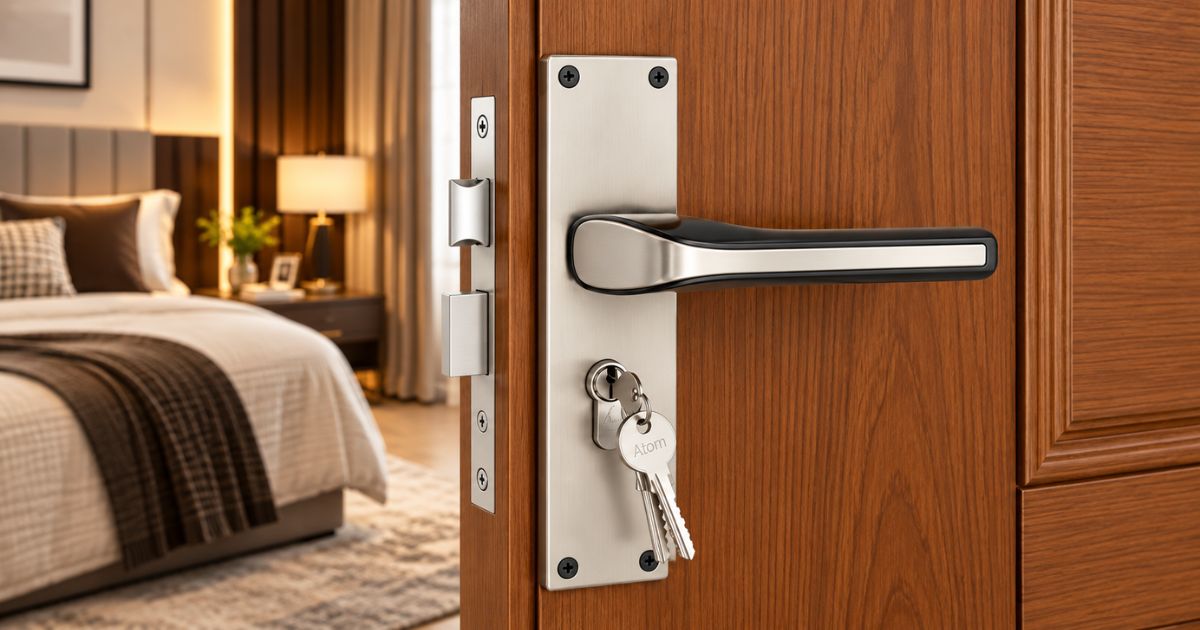
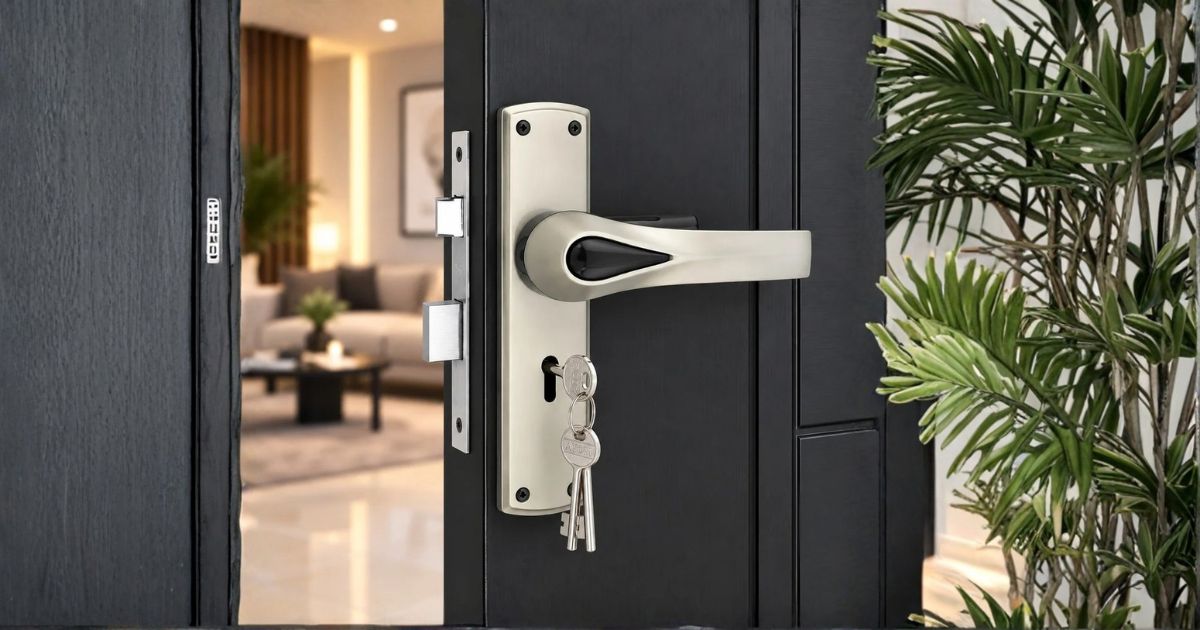
An aluminium partition door is built from hollow extruded sections. The stile on the lock side is often only a few centimetres wide on the face, and the hollow inside it is narrower still. A standard lock body simply will not slide in. What you need is a narrow-stile lock with a short backset, so the keyhole and the handle spindle land in the middle of that thin profile instead of on the glass.
Our honest view is that this one measurement decides more than finish, brand or design. Get the backset wrong and nothing else matters.
Measuring the profile before you buy
Take three measurements on the actual door, not from the drawing.
- The face width of the lock-side stile, from the door edge to where the glass bead starts.
- The internal depth of the hollow section, which the fabricator can confirm.
- The thickness of the shutter front to back.
With these, a supplier can tell you which lock body will sit flush and how long the spindle and cylinder need to be. If the fabricator is still cutting frames, settle the lock first and have the stile machined for it. Retrofitting into an assembled frame usually means awkward cutting and a door that never quite closes cleanly.
One detail people forget is the strike plate on the fixed frame. Aluminium jambs flex more than wooden ones, so the strike should be backed with a packing piece or fixed into a reinforced section. Otherwise daily slamming slowly pushes it out of line.
Choosing an office cabin door lock by use
Not every cabin needs the same level of locking. Think about who uses the room and when.
A director’s cabin or an accounts room holding files and cheque books deserves a proper deadbolt worked by a key from outside, plus a latch so the door stays shut through the day. A meeting room usually needs only a latch with a privacy turn inside, because nobody wants to hunt for a key before a client call. Office washrooms need a thumb-turn inside and an emergency release outside.
For a shop, the logic shifts. The glass front door is the one that matters at night, so it needs a key on both sides, or a key outside and a thumb-turn inside, depending on the fire exit rules in your building. Storeroom doors behind the counter can take a simpler office cabin door lock keyed from outside only.
If you are fitting out a whole floor, ask about master keying. One key that opens every cabin, while each person’s key opens only their own room, saves a lot of drama when someone leaves the company with a key in their bag.
Frameless glass and the glass door lock question
Some partitions skip the aluminium stile on the door altogether. The shutter is a single sheet of toughened glass held by patch fittings and swinging on a floor spring. A mortise lock cannot go into glass, so this setup needs a glass door lock that clamps onto the panel.
A bottom patch lock sits at floor level and throws a bolt down into a floor socket. A centre lock clamps at handle height and locks into a strike on the fixed glass or the wall. Double glass doors can take a lock that joins the two leaves at the meeting edge.
Toughened glass cannot be cut once it is toughened, so any holes or notches must be made at the factory first. That makes the lock a design decision, not a site decision. Leave it to the end and you are stuck with whatever the existing holes allow.
Finishes that suit commercial interiors
Office profiles are usually powder coated black, grey or white, or left in anodised silver. A silver satin or plain aluminium finish blends into anodised frames. Matt black has become the default for newer fit-outs with black profiles, and it hides fingerprints better than polished metal.
We would steer away from bright polished brass on a busy office door. It looks lovely on day one and patchy within months, because hundreds of hands a day wear the surface unevenly. Satin and matt finishes age far better under that traffic.
A short checklist for the fit-out team
Before signing off an aluminium door lock order, run through this.
- Confirm stile width and backset for every door type.
- Decide which doors need a deadbolt, a plain latch or a privacy turn.
- Agree on master keying before ordering, not after.
- Match the handle finish to the profile colour.
- Check fire exit requirements for shop fronts and main office doors.
- Keep a few spare cylinders for the doors most likely to see lost keys.
That last point sounds fussy. It is the one office managers thank you for a year later.
Also read
Get the right fit from Atom Locks
Atom Locks has been making locks and door hardware in Aligarh since 2002, and works with builders, contractors and office owners as well as individual buyers. Browse the range at www.atomlocks.com or order through shop.atomlocks.com. If you are kitting out a full office floor or a row of shops, the Bulk Query form on the website is the quickest route to a project quote. To talk through your profiles and door count, call +91 9412273735 or write to sa***@*******ks.com.