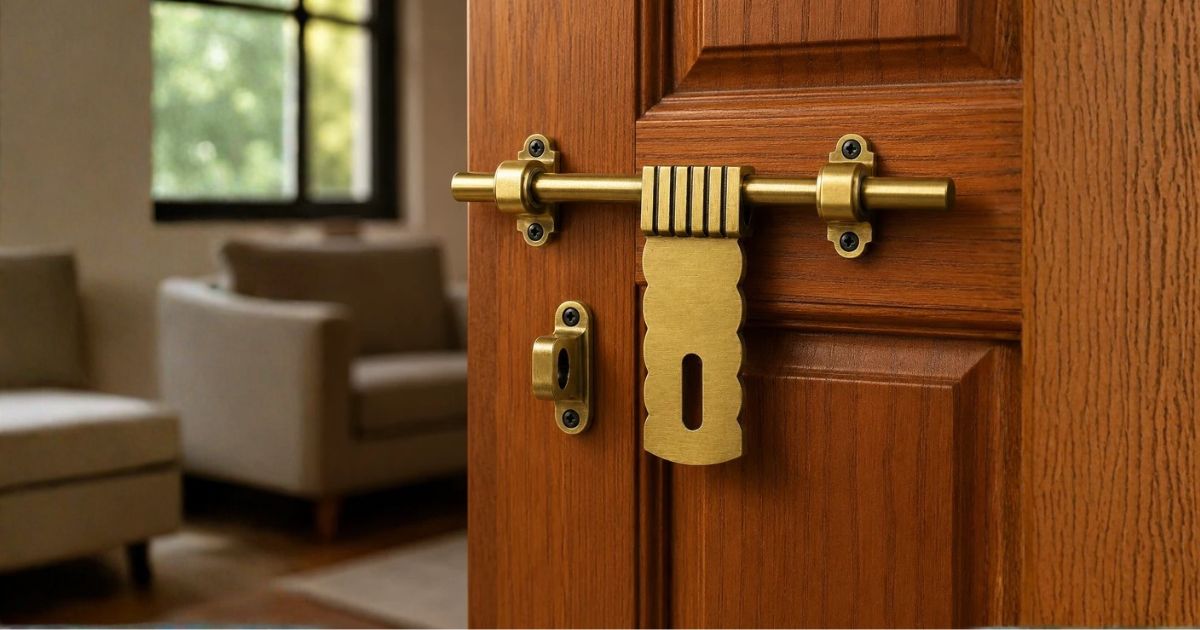
Most advice on door hardware says the shiniest piece in the shop is the one to buy. For a brass aldrop for main door use, that advice is close to backwards. A bright, mirror-like aldrop that looks perfect on the counter can look tired by the next monsoon, while a duller, heavier piece often gets better with age. The trick is knowing what you are actually holding.
With Diwali close and many families repainting, oiling and dressing up the entrance, the main door is getting more attention than at any other time of year. If the aldrop is on your list, here is how to choose one that will still look right at the next Diwali and the one after.
Solid brass vs brass plated, and why it matters
Solid brass means the body is cast or forged from the alloy all the way through. Brass plated means a cheaper base metal, often zinc alloy or mild steel, carries a thin coat of brass colour on the surface. From two steps away they can look identical.
The difference shows up over time. When a plated aldrop gets scratched by a padlock shackle or a ring of keys, the base metal underneath shows through, and on steel that spot can start to rust. Solid brass simply shows more brass when scratched, so wear looks like character rather than damage. Brass also does not rust, which counts for a lot on a front door that faces rain and humid air.
None of this makes plated hardware useless. On a rarely used inner door it can be perfectly sensible. For the door your whole household opens many times a day, solid metal through and through is worth the extra.
Judging a brass aldrop for main door use by weight
There is a quick test that works in any shop. Pick up two aldrops of the same length and compare them. Brass is a dense metal, so a solid brass aldrop feels noticeably heavy in the hand. A hollow or thin plated one feels light and sometimes slightly tinny when tapped.
Weight also matters on the door. A heavier bolt slides with a steady, deliberate feel and does not rattle when the door is shut hard. A light one can bounce in its channel and loosen its own screws over months of slamming. Look at the bolt itself too, because a thick round or square bolt is harder to bend than a flat strip, and the bolt is the part that takes the strain if anyone tries to force the door.
How an antique brass finish ages
Brass reacts with air and moisture, and that is not a defect. Raw polished brass slowly darkens toward a warm brown, and in humid towns it can pick up a greenish tinge in the corners. Whether you like that is a matter of taste, but you should know it is coming.
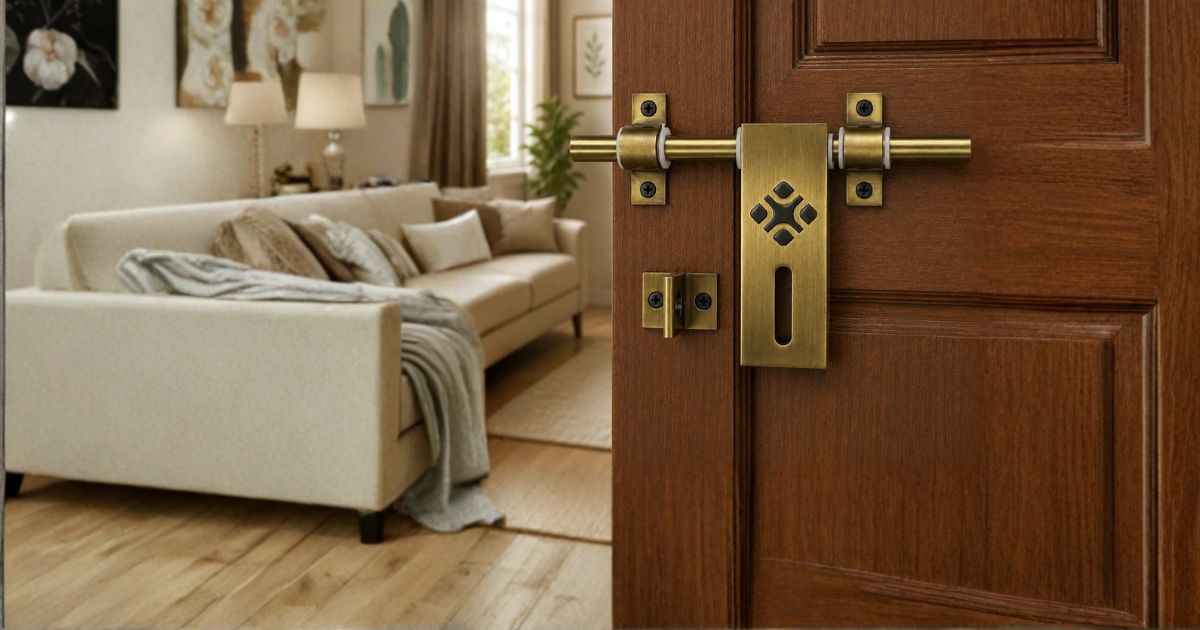
An antique brass finish is darkened deliberately at the factory, with highlights rubbed back on the raised edges. It hides fingerprints, hides small scratches, and keeps ageing gracefully because it already looks aged. For a main door that takes daily handling, this is the finish I would pick over bright polished brass almost every time. Lacquered bright brass holds its shine for a while, but once the lacquer chips near the handle, the exposed patch tarnishes faster than the rest and you get an uneven look that is hard to fix.
Main door hardware for Diwali, a short refresh plan
A full replacement is not always needed. Many front doors only need a weekend of attention before guests start arriving.
- Remove the old aldrop and check the screw holes. If they are stripped, plug them with wooden dowels and glue, then re-drill.
- Clean or polish the door surface before fitting anything new, so polish does not gum up the new bolt.
- Fit the aldrop, then the handle and lock, checking that they share a finish.
- Add a drop of light oil in the bolt channel and slide it a dozen times.
- Hang the padlock and close the door hard once to make sure nothing fouls the frame.
The point of doing it in that order is that the aldrop, handle and lock are seen together on the same door. A brass antique aldrop beside a silver satin handle tends to look accidental. Keeping all main door hardware for Diwali in one finish makes even an older door look cared for.
Caring for a brass aldrop after fitting
Brass needs less fuss than people expect. A dry cotton cloth every week or two removes dust and fingerprints. For an antique finish, avoid metal polish altogether, because it strips the darkened layer and leaves bright patches. For bright brass, a mild polish a few times a year is enough.
Keep harsh cleaners away. The floor cleaner used on the doorstep often splashes onto the bottom of the door, and acidic or bleach based cleaners spot brass quickly. Oil the bolt rather than the outer face, since oil on the surface collects dust and turns sticky.
Also read
Order or ask Atom Locks
Atom Locks is an Aligarh manufacturer of locks and door hardware, working since 2002, and its range includes aldrops in finishes such as brass antique and silver satin alongside matching handles and locks. Browse the collection at www.atomlocks.com or order online through shop.atomlocks.com. If you are a builder or dealer needing a larger quantity, use the Bulk Query form on the site. To ask about a brass aldrop for main door fitting, call +91 9412273735 or email sa***@*******ks.com.