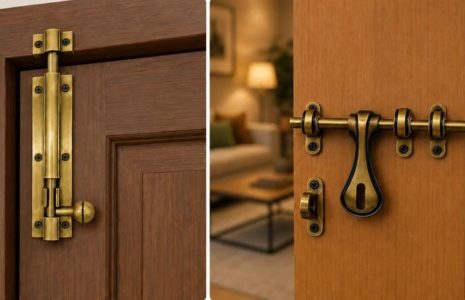

Picture a carved sheesham door with antique brass knobs, a heavy aldrop and old style hinges, the kind you see at the entrance of a restored haveli or a heritage themed cafe. Now picture a plain grey aluminium closer bolted across its top corner. It ruins the whole look in one go. That mismatch is why people search for a brass door closer, and why it deserves the same care as the lock.
A closer is not decoration though. It is a working machine that controls a heavy door many times a day. So the right choice comes down to two things in equal measure, how it looks against the door and whether it is sized and set to handle that door’s weight.
What a brass door closer usually is
Most closers sold as brass are a hydraulic door closer body, normally die cast aluminium or a similar alloy, finished in a brass or antique brass tone, with a matching arm and cover. A fully solid brass body is rare and heavy, and you do not need it. The closing force comes from a spring and oil chamber inside, not from the metal on the outside.
What you are really buying is the finish and the quality of the mechanism underneath. A good brass toned finish should look warm and even, without patches where the coating has thinned at the edges. The cover should fit snugly, and the arm should match the body so the whole unit reads as one piece against the wood. An antique finish door closer, with a slightly darker, aged brass tone, tends to sit more naturally beside old style handles than a bright polished gold.
Choosing the door closer size by weight and width
Here is where many installations go wrong. Closers come in power sizes, and the right door closer size depends on how heavy and how wide the door is. The common European scale runs from small numbers for light, narrow doors to higher numbers for wide, heavy ones. Most internal house doors sit at the lower end, while a thick solid wood main door or a large shop door needs a higher size.
Fit one that is too weak and the door will drift and fail to latch, especially when the wind pushes against it. Fit one that is too strong and the door will be hard to open for children and older family members, and it will slam the frame over time. Many good closers have adjustable spring power within a range, which gives you some room, but always check the range printed on the box against your door.
Two quick habits help. Weigh the door roughly by asking the carpenter what wood and thickness he used, since heavy hardwoods are far heavier than a flush door of the same size. And measure the width, because a wide door needs more power even if it is not especially heavy.

Arm type and where it mounts
Standard closers come with a regular arm that folds out at an angle, or a slide arm that runs in a track. The regular arm is stronger and more forgiving, and it is the usual choice for heavy wooden doors. The slide arm looks cleaner because nothing sticks out from the face, but it needs a little more power for the same door.
Mounting is about which side the door opens toward. On a door that pulls toward you, the body usually sits on the door and the arm shoe sits on the frame. On a push side door, it is often reversed or a parallel bracket is used. On a heritage look door with a deep frame and carved architrave, check there is a flat, solid surface for the arm shoe before you buy. Screwing into carving or a thin moulding will not hold.
Adjusting a hydraulic door closer for speed and latch
Under the cover of most hydraulic door closer models are two or three small valves. One controls the main sweep, the speed at which the door swings from fully open to almost shut. The second controls the latch speed, the last few degrees where the door snaps into the frame. Some also have backcheck, which cushions the door if someone flings it open.
Turn these valves in small steps, a quarter turn at a time, and test after each one. Set the sweep slow enough that an elderly person can walk through without being bumped. Then set the latch a little faster so the door actually clicks shut against the strike plate. Do not open the valves too far, because on some closers that can let oil escape. If a closer starts leaking oil, it needs replacing, not adjusting.
Matching an antique finish door closer to the rest of the door
A brass closer only looks right when the rest of the door agrees with it. Use the same brass antique finish on the handles, aldrop, tower bolts, hinges and door stopper. Mixed tones show up most on old style doors because there is so much visible hardware on them.
Also read
Talk to Atom Locks
Atom Locks has been manufacturing door and lock hardware in Aligarh since 2002, and its range covers door closers, hinges, door stoppers, aldrops and complete door kits, with brass antique among the finishes. Browse the full range at www.atomlocks.com or order through shop.atomlocks.com, and for a hotel, restaurant or heritage restoration project, fill in the Bulk Query form. Call +91 9412273735 or email sa***@*******ks.com to check which closer and finish suit your door.