

There is a brick in many Indian homes that has never been used for building anything. It sits behind the bedroom door, sometimes wrapped in an old cloth, and its only job is to stop the door from slamming when the cooler is on.
It works, sort of. It also gets kicked across the floor twice a day, chips the paint and looks exactly like what it is. A magnetic door stopper does the same job properly, and once you have one, the brick goes back to the garden.
How a magnet stopper works
A magnetic door stopper has two parts. One is fixed to the floor or the wall, the other to the bottom or back of the door. When the door swings open, the two meet and the magnet holds it in place. A gentle pull releases it.
That is the difference from an ordinary rubber stopper, which only stops the door from hitting the wall. A magnetic stopper also holds the door open, so it does not drift shut in a breeze or slam when someone opens a window in another room.
Where it makes the biggest difference
The main door is the obvious place. During the day many families keep the main door open with only the grill or the net door closed, for light and air. A main door stopper magnetic set keeps it firmly open instead of swinging every time a truck goes past.
Bedrooms with coolers and ACs are the next. Strong airflow pushes doors around, and a door that slams in the middle of the night wakes the whole house. Balcony doors, kitchen doors and the door to the puja room, which many people like to keep open in the morning, are also good candidates.
In offices, a magnet stopper on cabin doors and meeting rooms keeps them open during working hours and protects the walls from handles.
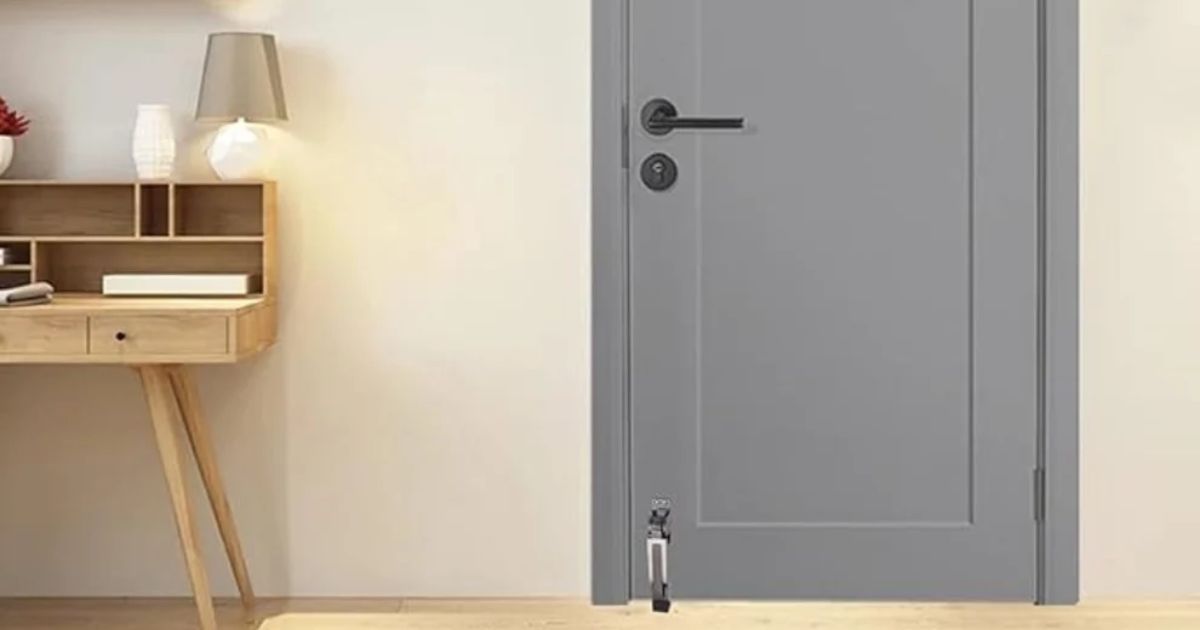
Floor-mounted or wall-mounted
A floor-mounted stopper sits on the floor where the door ends its swing. It is the most common type and works well when there is space between the door and the wall.
A wall-mounted stopper is fixed to the skirting or wall behind the door. It keeps the floor clear, which is nice for mopping and for homes with small children who trip over anything at ankle height. It needs the door to open fully against the wall.
Pick based on your floor. If you have expensive marble or tiles and do not want to drill them, a wall-mounted stopper is the kinder option.
What to look for in a good one
Check the strength of the magnet. A weak magnet holds a light door but lets a heavy teak main door drift away. A magnet that is too strong makes the door hard to close for children and elderly family members. Ask for one suited to the weight of your door.
Look at the body. A solid metal body survives being kicked, mopped around and bumped by furniture for years. The finish should match the other hardware on the door, so a satin steel stopper next to satin steel handles, or an antique finish next to brass.
Make sure there is a rubber cushion or buffer where the two parts meet, so you do not get a loud metal clack every time the door opens.
Fitting it in the right spot
Open the door to where you want it to rest, not all the way to the wall if the handle will hit it. Mark the spot, then fix the floor part slightly in from the very edge of the door so the magnet meets squarely. Use the right plugs for your floor or wall, because a stopper that pulls out of the floor is worse than none at all.
Also read
Talk to Atom Locks
Atom Locks makes door stoppers along with door closers, hinges and complete door kits. See the Door Accessories range at https://www.atomlocks.com/ and shop online, or raise a Bulk Query for projects. Call +91 9412273735 or email sa***@*******ks.com.