Most people choose pull handles the way they choose a saree border, by eye, from a photo, and on the strength of the finish. That is not wrong, but it skips the one question that decides whether the handle will look right on your door for the next fifteen years. How long should it be?
A handle that is too short on a tall teak main door looks like a cabinet knob that wandered off. One that is too long on a standard flat door looks borrowed from a hotel lobby. Length, fixing method and grip matter more than the catalogue photo suggests, so this piece walks through each.
Where pull handles make sense
A pull handle is a fixed grip with no moving parts. It does not turn, press or latch. It simply gives you something to pull, while the actual locking is done by a separate lock, mortise body or deadbolt.
That makes it ideal for main doors that are mostly kept locked with a key, for double doors where a central lever would look odd, and for pivot doors that are too wide and heavy for a normal handle. Many newer flats in Bengaluru and Gurugram now pair a tall vertical pull with a separate key lock or smart lock on the main door, and the look has spread quickly to independent houses too.
They are less suited to bedroom or bathroom doors that need a latch to stay shut. There, a mortise handle set does both jobs in one.
Matching pull handle size to door height
There is no legal rule here, only proportion and comfort. A useful starting point is to think of the handle as a fraction of the door height rather than a fixed number.
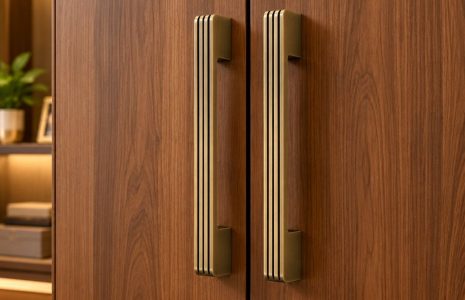
For a standard main door of around seven feet, a handle somewhere between a foot and a foot and a half long sits comfortably and does not overwhelm the shutter. For taller doors that run eight to ten feet, which are common in bungalows and newer villa projects, a longer pull in the two to four foot range looks intentional rather than lost. For double doors, a matching pair placed close to the meeting edge works best, and they should be the same length so the eye reads them as one design.
Height on the door matters as much as length. The middle of the grip should land roughly where an adult’s hand naturally falls, which is around waist to chest height. A very long handle can run well above and below that, but the centre should still be in the comfortable zone. If elderly parents or children use the door often, err slightly lower.
Before ordering, stand at the door and hold a measuring tape vertically where you plan to fix the handle. It takes thirty seconds and saves you from a size that looked fine on screen.

Back to back pull handle fixing explained
On a main door, you usually want a handle on both faces, one to pull from outside and one from inside. The neat way to do this is a back to back pull handle, where two handles are joined by bolts that pass right through the door.
One handle carries threaded studs or sockets, the other carries matching screws, and both are tightened through holes drilled in the shutter. The result is a handle that cannot be unscrewed from outside, because the fixing is hidden on the other face. It also holds far more firmly than a handle screwed only into the surface, which matters on a heavy door that gets pulled hard every day.
Two practical points. First, measure the door thickness before ordering, because the connecting bolts need to suit it. A thick solid wood door and a thinner flush door need different lengths. Second, if you want a long pull on the outside and a short one inside, say so when you order, since the hole spacing must line up on both faces. Getting a fitter who drills straight through is half the job. A hole that wanders slightly will pull the inside handle off angle.
Grip, profile and everyday comfort
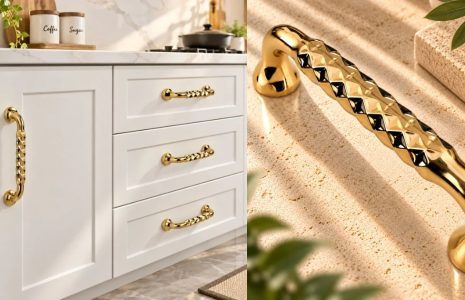
The cross-section of the grip changes how a handle feels far more than its length. Round bars are friendly and easy to hold. Square and flat bars look sharper and suit modern doors, but their edges can feel harsh if the corners are not softened. A good main door pull handle should leave enough gap between the bar and the door for knuckles, even when someone is carrying shopping bags.
Weight is another honest test. A solid handle feels substantial in the hand, and on a main door that first touch says something about the house. Thin hollow tubes can dent and rattle over time.
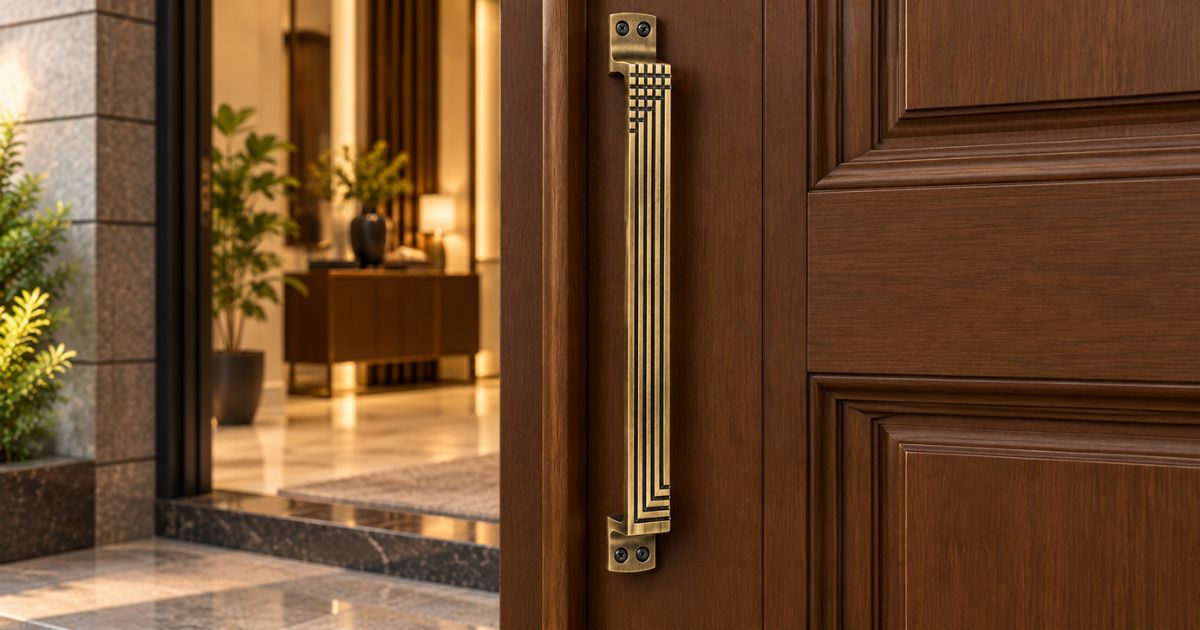
Choosing a finish that lasts at the entrance
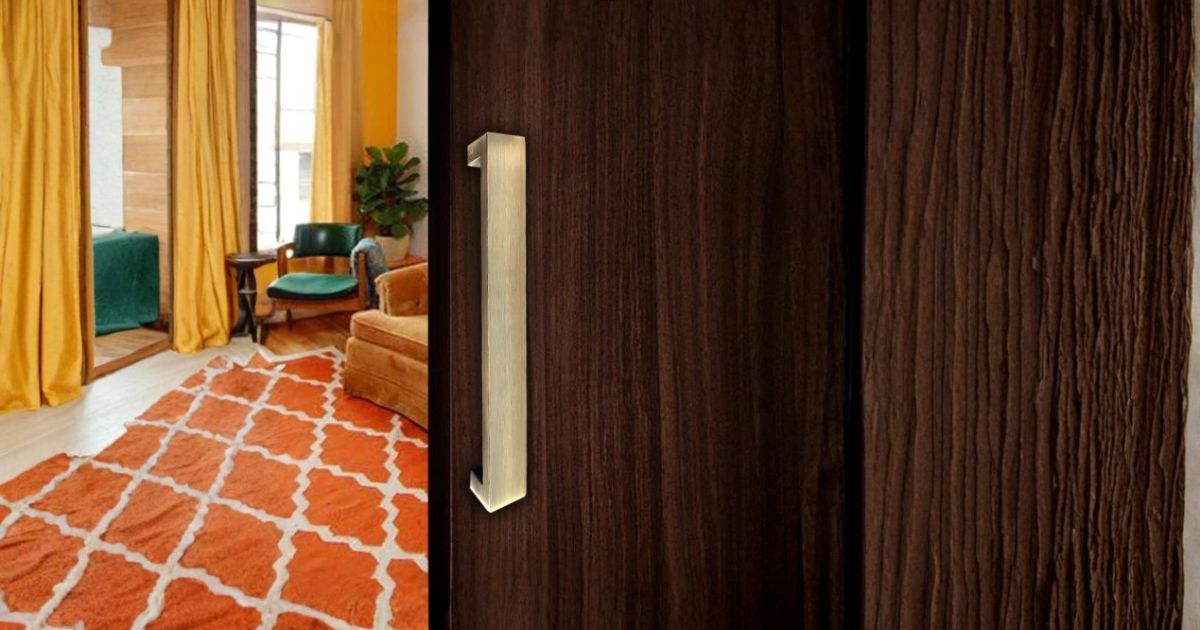
The main door faces weather, dust and a lot of hands, so finish choice is not only about looks. Brass antique suits carved wood and traditional homes, and it hides wear because the finish is meant to look aged. Matt black is the modern favourite and pairs well with dark laminate or walnut doors. Rose gold and gold matt work on lighter veneers where you want warmth without shine. Silver satin is the quiet option that suits almost anything.
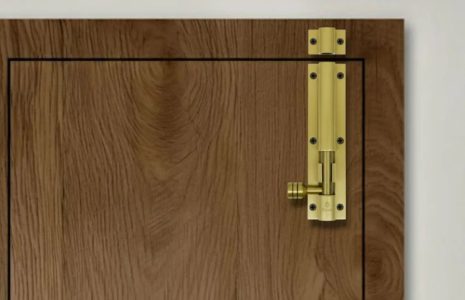
Our small opinion is that the pull handle should match at least one other piece of hardware you can see from the same spot, such as the lock, the aldrop or the door knocker. A main door with three different metal tones always looks unfinished, however good each piece is on its own.
Also read
Order or ask Atom Locks
Atom Locks has been manufacturing door hardware in Aligarh since 2002, including pull handles and double door pull handles in several finishes. See the full range on www.atomlocks.com or buy directly from shop.atomlocks.com. Builders and contractors outfitting a whole project can use the Bulk Query form on the site. For help picking a size or finish, call +91 9412273735 or email sa***@*******ks.com.