People tend to call the door stopper the least important part of a door kit. We disagree. A cheap wedge or a missing stopper is the reason so many Indian homes have a round dent in the wall behind every bedroom door, a cracked tile by the balcony and a door that slams every time the ceiling fan is switched on. A door stopper lock, meaning a stopper that also holds the door in place, solves all three for very little effort.
The term gets used loosely in shops, so it helps to be clear. A plain stopper only stops the door from hitting the wall. A door stopper lock, also sold as a door holder or door catch, does that and then grips the door so it stays open until you release it. Some foot operated versions can also hold a door shut in a fixed position. That second job is what makes them worth choosing over a simple rubber bump.
How a door holder actually grips the door
There are three common mechanisms.
- Magnetic. A magnet on one part meets a metal plate on the other. The door clicks in when pushed and pulls free with a firm tug.
- Spring catch. A small spring hook or clip on the floor or wall grips a matching piece on the door. It holds a bit more firmly than a magnet in strong cross winds.
- Foot operated. You press a pedal with your foot and a rubber shoe drops to the floor to wedge the door in any position. Press again and it lifts. These are handy at shop entrances and storerooms where the door is opened at different angles.
For most homes a magnetic or spring catch type is plenty. Foot operated holders earn their place where hands are full, such as kitchens, utility areas and the door to the parking.
Floor door stopper or wall mounted, choosing the right one
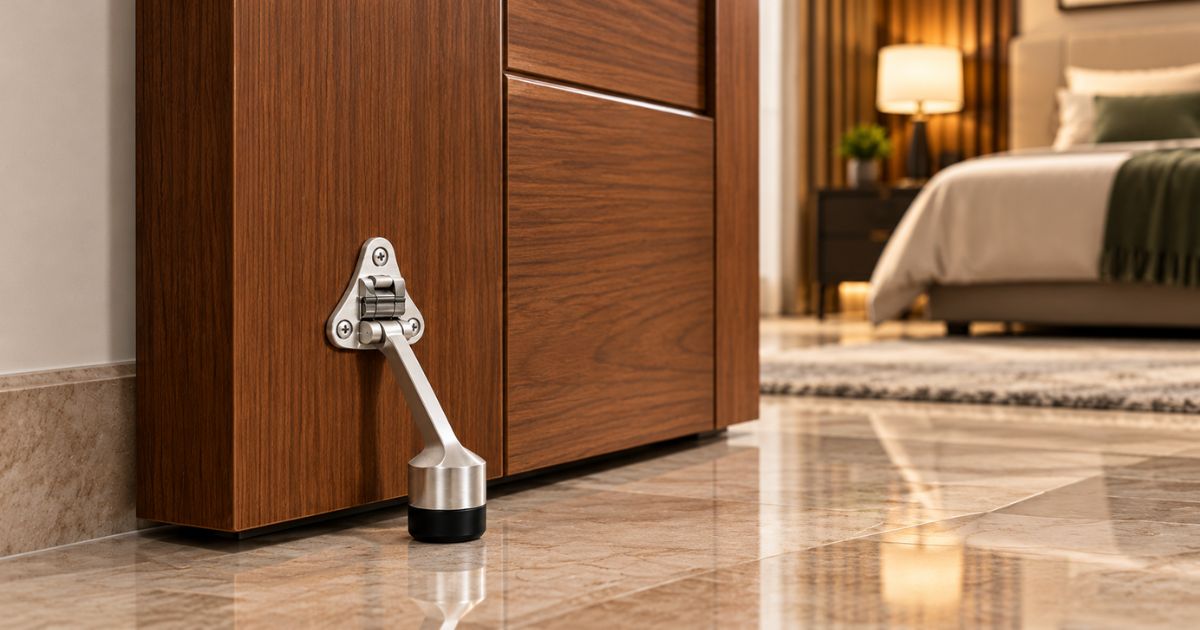
A floor door stopper is screwed into the floor where the door would hit the wall. It catches the door low, near the bottom corner. It works on almost any door, but you need to drill into tile, marble or granite, and a stopper in the walking path can catch a toe at night. Place it close to the wall and a little inside the door’s swing, not in the middle of the room.
A wall mounted door stopper is fixed on the skirting or the wall at about handle height or lower. It keeps the floor clear, which is why we prefer it in bedrooms and living rooms. The catch is that the wall behind must be solid. On a thin gypsum partition, a wall stopper can pull out the first time a child swings on the door, so use proper anchors or move to the floor.
A third option, often overlooked, is a stopper fixed to the door itself near the bottom. It travels with the door and meets the wall or floor. It is useful on rented flats where the owner does not want holes in the marble.
Which room needs which door stopper lock
Bedrooms. Wall mounted magnetic holders. They keep the door open for airflow when the fan or AC is on and let it close quietly at night.
Bathrooms. A small floor or door mounted stopper is enough, since the bathroom door is mostly kept shut. Choose a finish that handles moisture, such as a satin or matt finish over a sound base metal, and keep it away from where water pools.
Kitchen. A foot operated door holder, because you are always walking in with something in your hands.
Main entrance. A heavy floor stopper with a strong catch. Main doors are heavy and swing with force, and the stopper protects the handle and the wall behind it. In houses with a separate grill or safety door, give that its own stopper too.
Balcony and terrace doors. These take the most wind. A spring catch or a strong magnetic door stopper lock stops a gust from slamming the door and cracking glass panels.
Office and shop doors. Foot operated holders for doors that stay open through business hours, released at closing time with a press of the foot.
Getting the position right
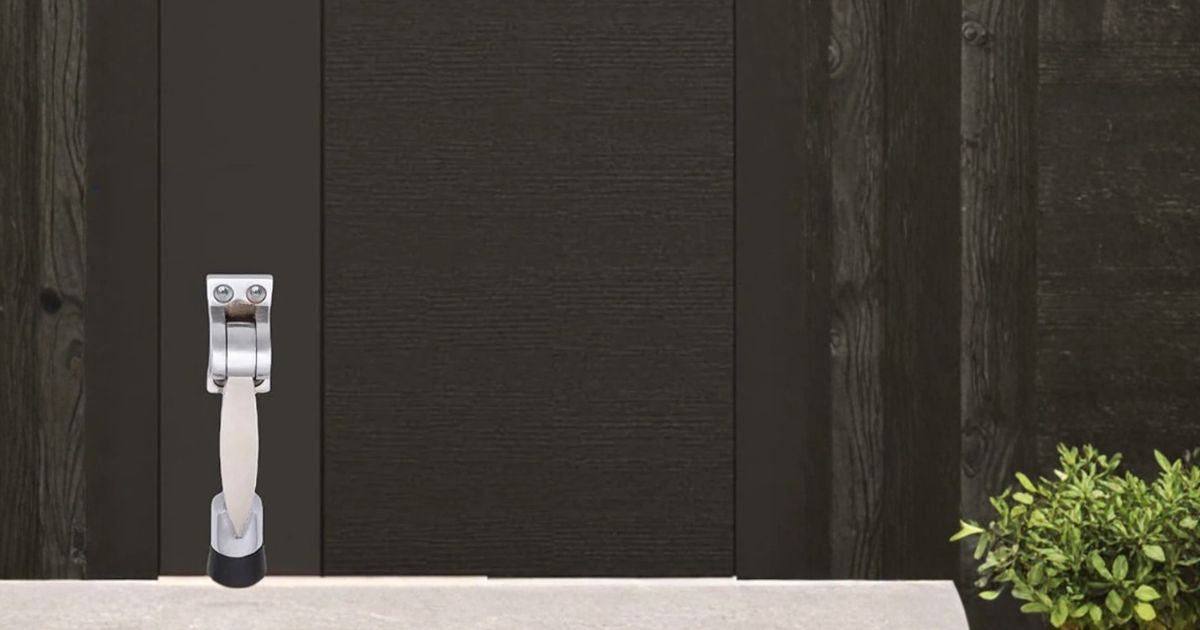
Open the door until the handle is about a hand’s width short of the wall. That is where the stopper should catch, not at the point where the handle already touches. Mark the spot, check the door closes freely past it, and only then drill. On a marble floor, use a masonry bit at slow speed and tape over the spot to stop the bit wandering.
Match the finish to the handles on the same door. A rose gold handle with a silver stopper at its feet looks like an afterthought. Buying the stopper from the same maker and in the same finish as the handle is the easiest way to avoid that.
Also read
Get the right fit from Atom Locks
Atom Locks has been making locks, handles and door kit hardware in Aligarh since 2002, including door stoppers, door closers, hinges and complete door kits in finishes that match its handle range. Look through the range on www.atomlocks.com or shop it at shop.atomlocks.com, and if you are fitting a whole building, send a requirement through the Bulk Query form. The team is reachable on +91 9412273735 and at sa***@*******ks.com.