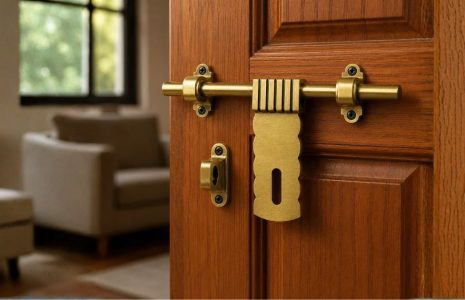
In old havelis across Rajasthan and in the lanes of old Lucknow, you can still find doors where the brass hardware is darker than the wood around it. Generations of hands have rubbed the aldrop, the knocker and the hinges until the metal has a deep, warm glow that no factory finish quite copies. Nobody fitted those pieces to look decorative. They became decorative by being used.
A brass aldrop set on a modern main door can carry some of that same feeling, if you treat it as part of the door’s design rather than a security fitting bolted on at the end.
Why a brass aldrop set works as a focal point
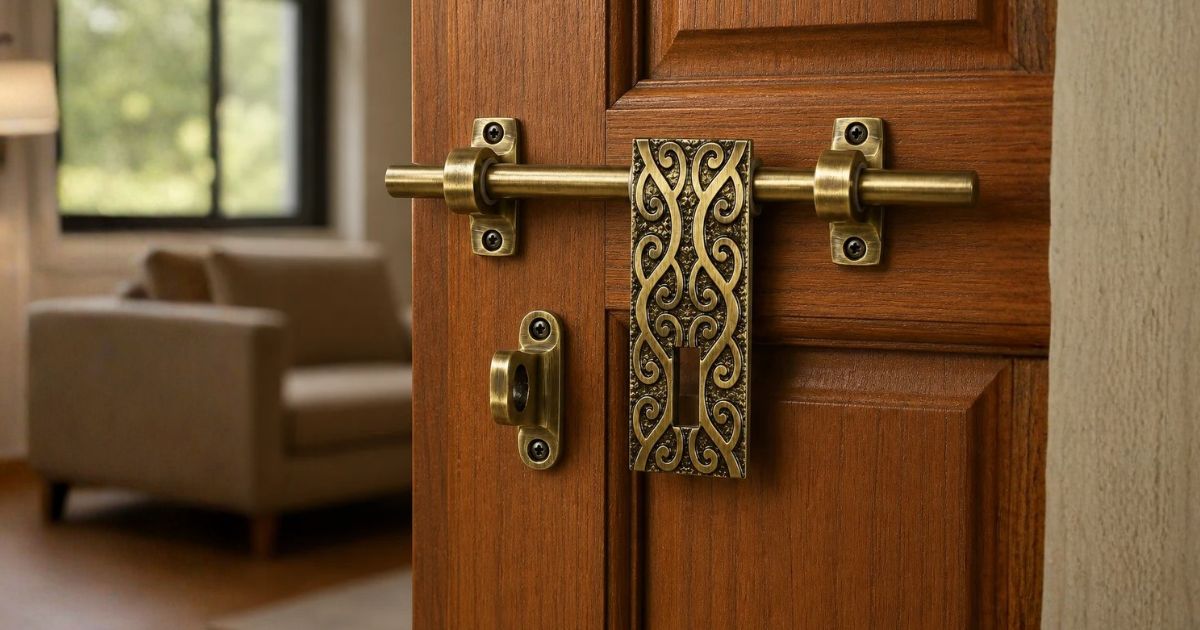
Most hardware on a door is meant to disappear. Hinges hide in the gap, tower bolts sit at the top and bottom, the lock body is buried in the shutter. The aldrop is the exception. It runs horizontally across the face of the door at eye level, it is often the largest single piece of metal on the shutter, and it is the first thing a guest’s eye lands on after the nameplate.
That makes it a natural design anchor. A heavy, well-proportioned brass aldrop set gives a plain flush door some character, and on a carved wooden door it ties the carving back to the hardware so the two feel planned together.
Choosing the style and aldrop design for main door
There are broadly two directions.
The first is the antique brass aldrop, finished in a darkened, slightly uneven tone that suggests age. It suits teak and sheesham doors, carved panels, temple-style entrances and homes with traditional interiors. It is also forgiving, because small scratches simply blend in.
The second is bright or satin brass, which has a cleaner and more contemporary look. It works on lighter veneer doors, laminate finishes and modern homes that still want a touch of warmth at the entrance.
When picking an aldrop design for main door, look at the shape of the hasp and the end plates. Rounded, scrolled ends lean traditional. Straight, squared ends lean modern. Then check proportion. A long, slim aldrop looks right on a tall door, while a shorter, chunkier one suits a standard height shutter.

Getting placement and matching right
An aldrop placed too high looks awkward to reach, and too low looks like an afterthought. Most fitters set it roughly at chest height, a little above the lock or handle, so both can be reached comfortably without the pieces crowding each other.
Match the aldrop to at least the handle and the door knocker if you have one. On a double main door, keep everything symmetrical around the meeting edge, with tower bolts on the passive leaf in the same finish. Mixing antique brass on the aldrop with shiny chrome on the handle is the most common mismatch we see, and it undoes the whole effect.
A small tip from the field. Choose the padlock last, in brass or a matching tone, rather than reusing the old steel one from the previous door. A grey padlock hanging from a beautiful brass aldrop is like wearing sports shoes with a sherwani.
Caring for an antique brass aldrop
Antique finishes are designed to look aged, so the care routine is gentle.
Wipe the aldrop with a soft, dry cloth every week or two to remove dust. Once a month, use a cloth dampened with mild soapy water, then dry it fully. That is genuinely all it needs.
Do not use metal polish, lemon or abrasive powders on an antique finish. They strip the darkened layer and leave bright patches that look worse than any amount of dust. If a piece has picked up sticky marks from tape or rangoli colour, a little coconut oil on a cloth usually lifts them without harming the finish.
Brass aldrop polishing for bright and satin finishes
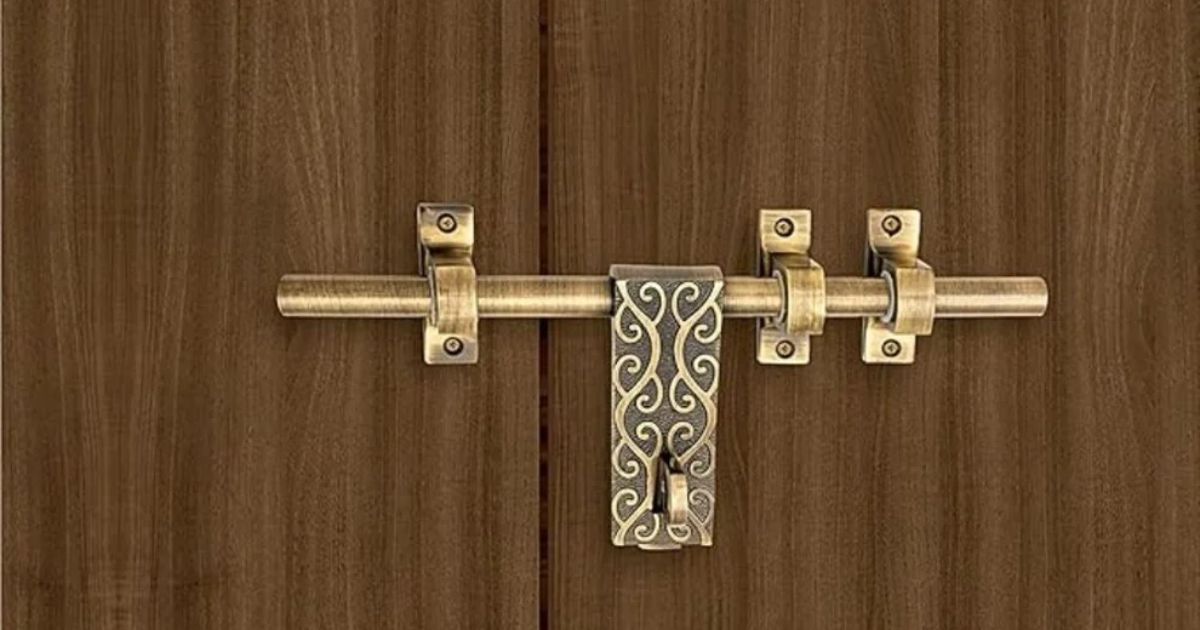
Bright brass is often protected by a clear lacquer. As long as the lacquer is intact, treat it like the antique finish, with only a soft cloth and mild soapy water. Polishing lacquered brass with an abrasive will scratch the coating and let tarnish in underneath.
Brass aldrop polishing only becomes necessary when the metal is unlacquered or the lacquer has worn away. Here the traditional methods still work well. A paste of tamarind, or lemon juice with a pinch of salt, rubbed gently with a soft cloth, will bring back the shine. A commercial brass polish is faster. Whichever you use, rinse with clean water and dry immediately, then buff with a dry cloth.
Many families polish before Diwali, which is a good rhythm. Once or twice a year is enough for a main door in most climates. Homes near the sea, or doors that take direct monsoon rain, may need it a little more often.
Also read
Get the right brass from Atom Locks
Atom Locks has been manufacturing aldrops and other door hardware in Aligarh since 2002, with finishes that include brass antique alongside gold matt, rose gold, black and silver satin. Browse the aldrop range on www.atomlocks.com, or order from the online shop at shop.atomlocks.com. Builders and interior designers ordering for a full project can use the Bulk Query form. To ask about a matching set, call +91 9412273735 or email sa***@*******ks.com.