Every family has a story about someone getting locked inside a bathroom. Usually it is a child. Sometimes it is an uncle at a wedding. Occasionally it involves a carpenter, a screwdriver and a door that never quite closed properly again.
Most of these stories have the same cause. The bathroom had the wrong lock. A mortise lock for bathroom use needs to do something no other lock in the house does, which is lock easily from the inside and open easily from the outside when it has to.
What makes a bathroom lock different
A bedroom lock is designed to keep people out. A bathroom lock is designed to give privacy while keeping everyone safe. That is a different brief.
A proper bathroom privacy lock has a thumb turn or small knob on the inside, so nobody needs a key to lock it. On the outside, instead of a key hole, it has an emergency release, usually a small slot or indicator that can be turned with a coin or a flat tool. In an emergency, anyone in the family can open it in seconds.
Many also have a small indicator that shows red or white, so you know the bathroom is occupied without knocking twice.
Why a key operated lock is a bad idea here
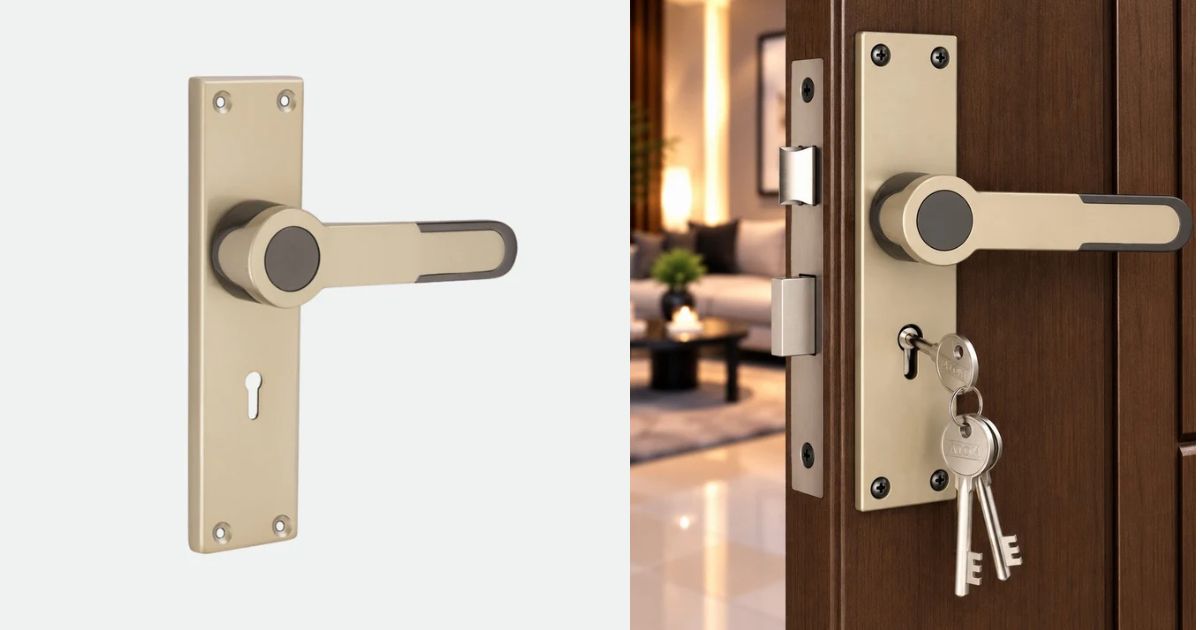
Some homes still have a regular key lock on the bathroom door. It seems harmless until a toddler turns the key from inside and cannot turn it back, or an elderly parent feels unwell and the door is locked.
If you have a key lock on a bathroom door now, consider replacing it. It is one of the cheapest safety upgrades you can make in a home.
Moisture changes everything
Bathrooms are humid. Steam from the geyser, splashes from the shower and wet hands on the handle all add up. A lock and handle that would last fifteen years on a bedroom door can show rust or tarnish in two on a bathroom door.
Choose handles in stainless steel or in a good quality coated finish meant for wet areas. Avoid plain iron parts. Check that the lock body itself is protected, because the inside of the door edge collects moisture too.
If your bathroom door is a PVC or WPC door, which many new homes use for wet areas, tell the shop. These doors need locks and screws suited to their material and thickness.
Handle shape and the people who use it
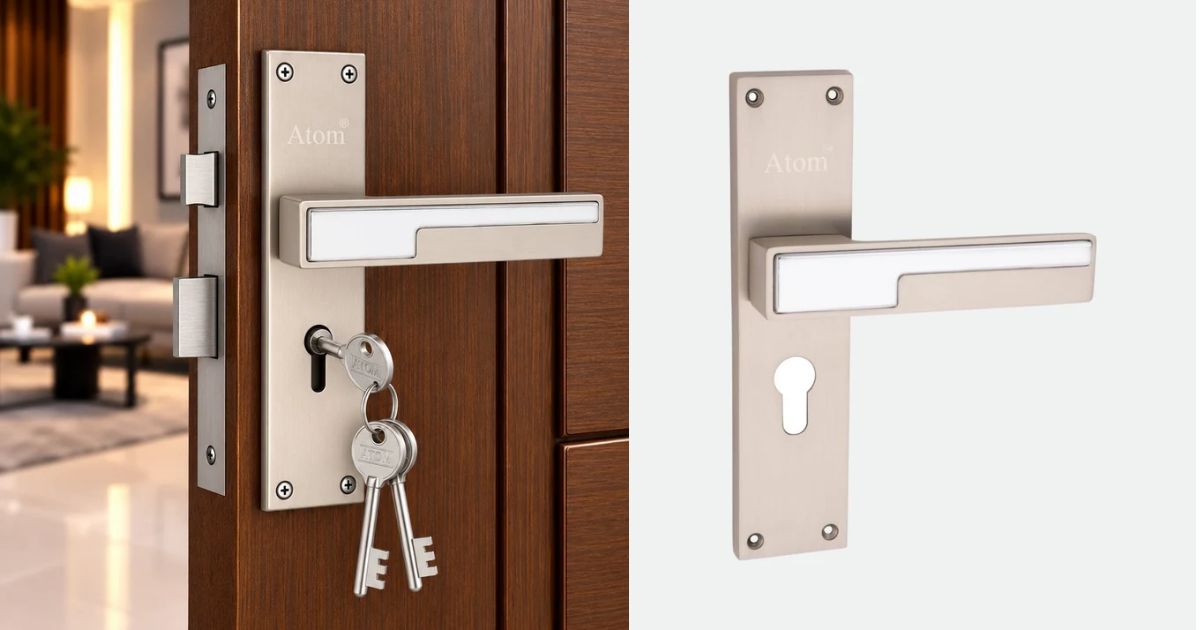
Think about who uses the bathroom. Children need a handle they can reach and press. Elderly family members need a lever that is easy to push down with a wet or weak hand, not a small round knob they have to grip and twist.
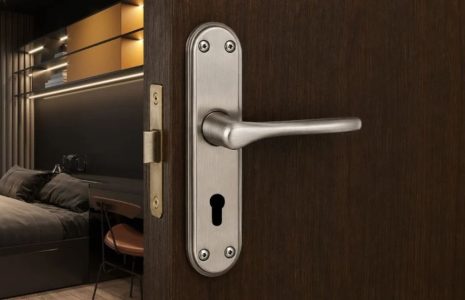
A lever handle on a rose or plate is the most practical choice for most homes.
Fitting and adjustment
The door should close fully without being pushed. If the latch has to be forced into the keeper, the lock will feel stiff and people will stop using it properly. A carpenter can adjust the keeper in a few minutes.
Test the emergency release from outside after fitting. Lock from inside, then open it from outside with a coin. Make sure every adult in the house knows how to do it.
Matching the rest of the house
Bathroom locks do not need to look different from the rest of the doors. Most handle designs come in versions for bedrooms, bathrooms and passages, so you can use the same handle across the house and change only the lock body behind it.
Also read
Talk to Atom Locks
Atom Locks makes mortise locks, bathroom lock bodies and mortise handles for homes, hotels and hospitals. Browse the Door Locks and Handles ranges at https://www.atomlocks.com/ or raise a Bulk Query for your project. Call +91 9412273735 or email sa***@*******ks.com.