
The old steel almirah had one great advantage. It locked. The key lived on the mother’s key bunch, and everyone in the house knew that the jewellery box, the property papers and the Diwali cash were safe behind it.
Modern sliding wardrobes look far better. Many of them, though, arrive with no lock at all, or with a token lock that a butter knife could open. If your new bedroom has a big sliding wardrobe, adding a proper wardrobe sliding door lock with key is worth doing before you move the valuables in.
Why sliding doors need a different lock
A hinged wardrobe door swings out, so a normal cabinet lock with a cam that turns behind the frame works fine. A sliding door does not swing. It moves sideways along a track, often overlapping the second door.
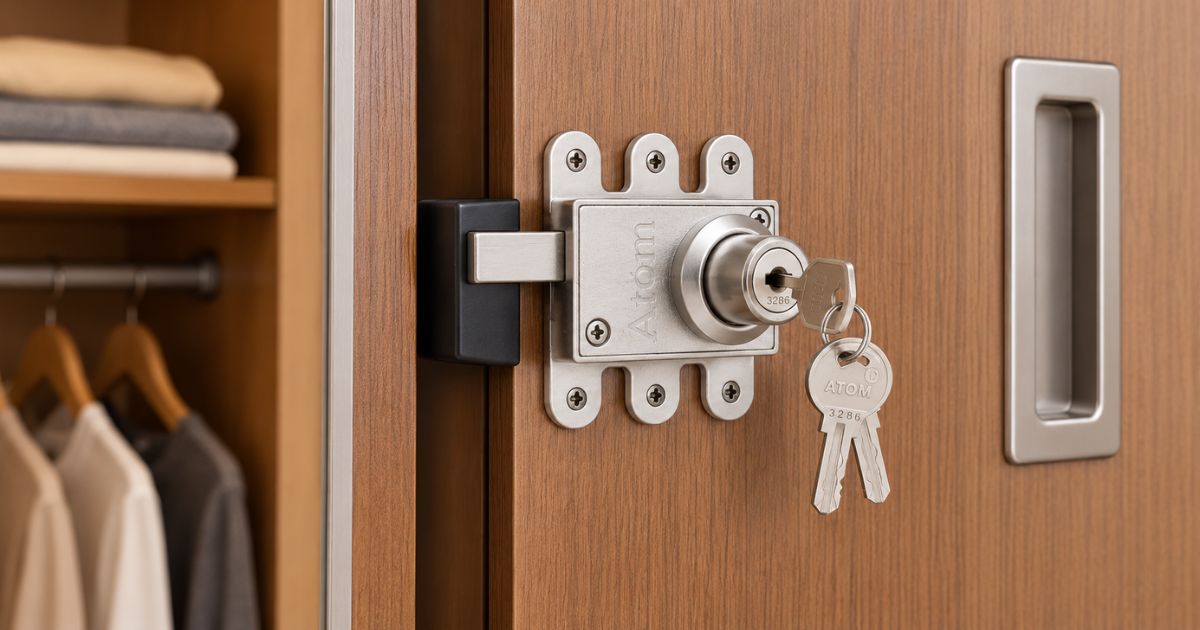
So a sliding wardrobe lock has to stop sideways movement instead. The most common design is a lock fitted on the front door that throws a bolt or a hook into the back door or into the side panel. Once locked, the two doors cannot slide apart, and the wardrobe stays shut.
The main types you will see
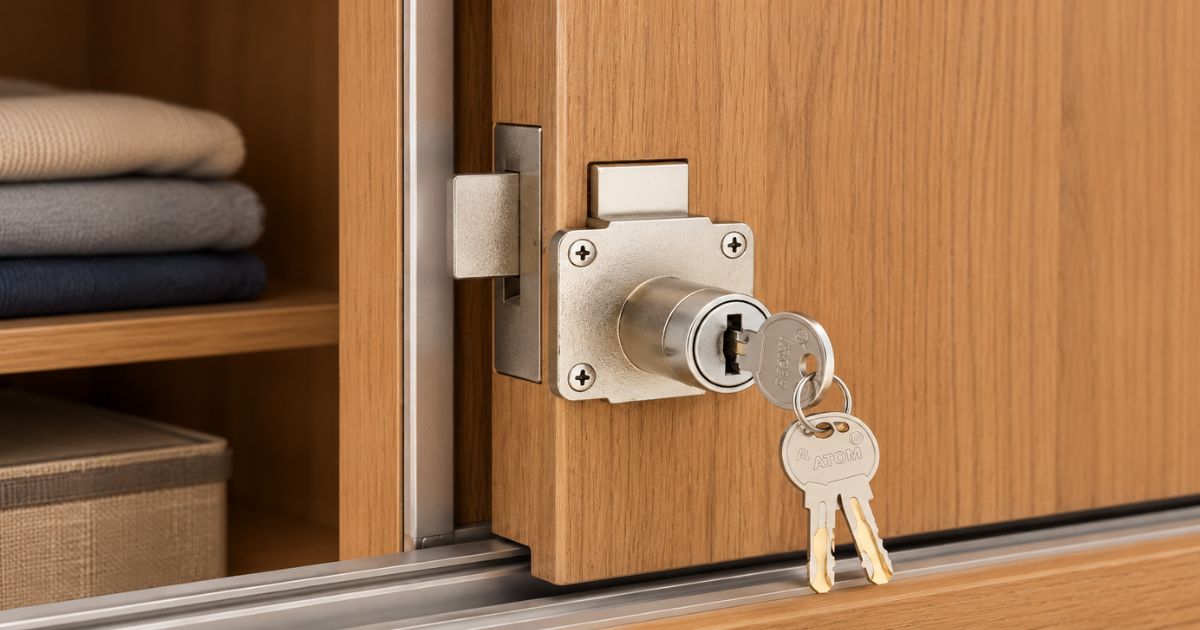
The most common is the push lock, where you press the cylinder in to lock and turn the key to release. It is simple, quick to use, and fits neatly on the edge of the front panel.
Another type is a hook lock, where turning the key swings a small hook that grips a keeper on the other door. These grip well and resist being pulled apart.
For wardrobes with a mirror or glass front, there are special locks designed to fit on glass panels without drilling through the visible face. If your wardrobe has a lacquered glass or mirror door, mention it at the shop, because a normal wooden door lock will not fit.
Where to place the lock
Most people put the lock at handle height on the front door, where the two doors overlap. This is easy to reach and quick to use every day.
If one section of the wardrobe holds jewellery or documents, consider an extra drawer lock inside that section. A wardrobe lock stops casual access. A locked drawer inside it adds a second layer that most people never get past.
What separates a good wardrobe lock from a weak one
Look at the cylinder. It should turn smoothly with the key and not wobble in its housing. Cheap cylinders often come with keys that look identical to every other lock on the shelf, which defeats the point. Ask for a lock that comes with its own unique keys.
Check the bolt or hook. It should be solid metal and should sit deep into the keeper. If it only grips the edge, a firm pull will slide the doors apart anyway.
The finish should match your wardrobe handles. A chrome lock next to black profile handles looks like an afterthought.
Fitting it without damaging the wardrobe
Measure the thickness of your sliding panel before you buy. Laminated board, plywood and aluminium profile doors all need different fittings. Use a carpenter who has fitted sliding wardrobe locks before, because drilling the wrong spot on a factory made panel cannot really be undone.
Test it after fitting. Lock and unlock it twenty times. Slide the doors both ways. If anything catches, adjust it now rather than living with a lock that sticks.
A word on spare keys
Every wardrobe lock comes with at least two keys. Keep one on your main bunch and put the other somewhere outside the wardrobe itself. It sounds obvious, but a surprising number of people lock the spare key inside the very wardrobe it opens.
Also read
Talk to Atom Locks
Atom Locks makes drawer locks, cabinet handles and hardware for wardrobes and modular furniture, made in Aligarh. See the Door Locks and Handles ranges at https://www.atomlocks.com/ or raise a Bulk Query for furniture makers and interior projects. Call +91 9412273735 or email sa***@*******ks.com.