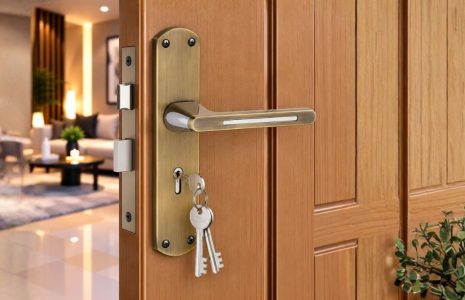

In most homes, the lock inside the door outlives the handle on it. The lock body sits protected in a pocket of wood, while the handle takes every push, every pull and every child swinging on it. So when a lever starts drooping or the finish peels off, buying a door lock handle only is usually the sensible fix. You keep the lock, the keys and the cut in the door, and you change the part you actually see and touch.
The catch is that a handle has to fit a lock it was not sold with. Get the measurements right and the job takes twenty minutes with a screwdriver. Get them wrong and you end up with a handle that wobbles, a key that will not reach the keyhole, or a fresh set of holes in a good door.
When a door lock handle only is enough
Before ordering anything, check which part has failed. Remove the handle on one side and work the latch with a screwdriver pushed into the square hole of the lock body. If the latch moves in and out smoothly and springs back, the lock is healthy and a new handle will cure the trouble.
If the latch sticks, the key turns roughly, or the bolt does not throw fully, the fault is inside the lock body. A new handle will look better for a week and then sag again, because a weak lock spring drags the lever down. In that case it is worth replacing the mortise lock and handle together. A drooping lever on a healthy lock, though, almost always means a worn handle spring or a stretched spindle hole, and that is a handle only job.
Handle on plate vs rose, know what you have
There are two broad families, and you should replace like with like unless you are ready to fill old holes.
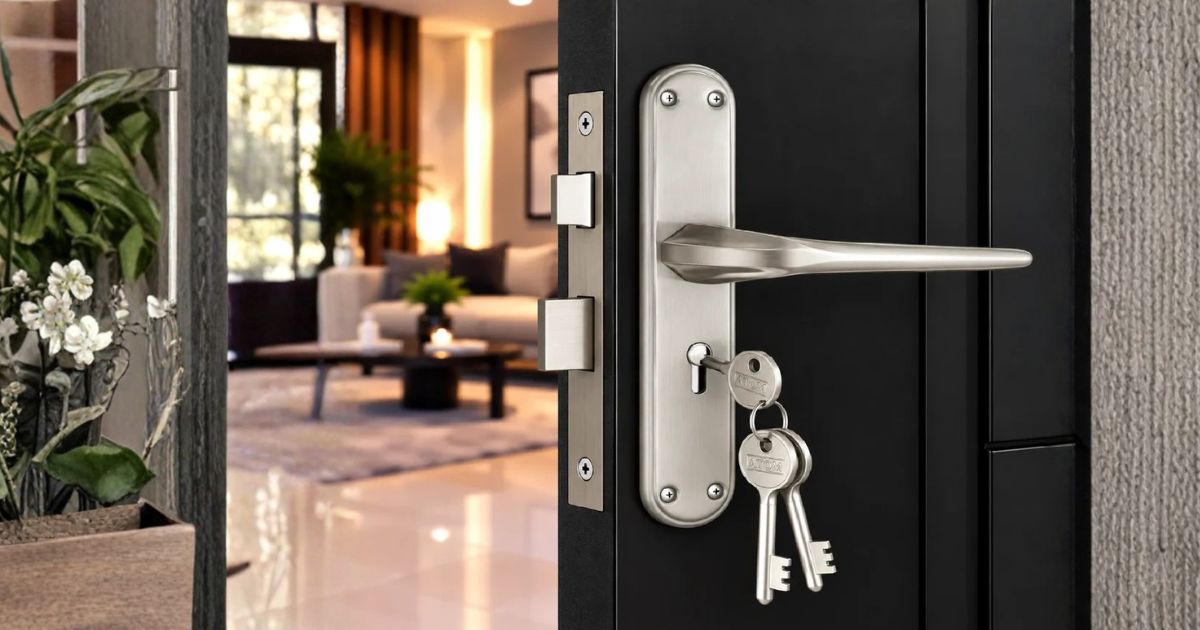
Handle on a plate. The lever and the keyhole share one long backplate, fixed with screws through the door. This is the older and still very common Indian style. When you change it, the new plate should cover the old screw holes and line up with the existing keyhole.
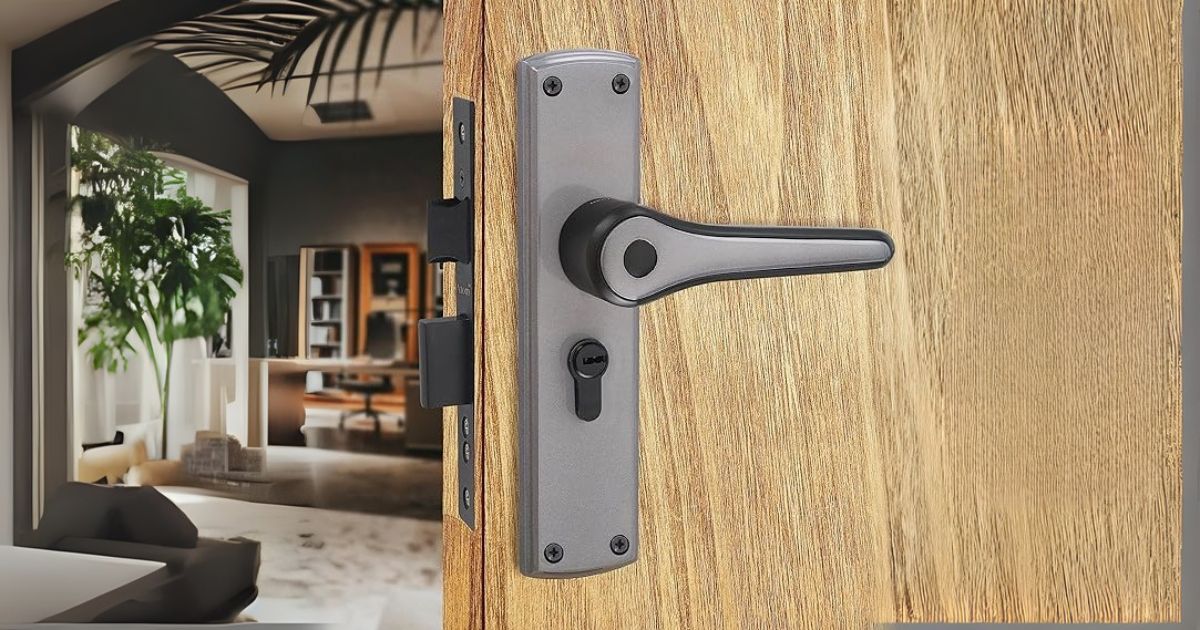
Handle on a rose. The lever sits on a small round or square rose, with a separate little escutcheon for the key below it. This is common on newer flush doors.
You can swap a rose handle for a plate handle easily, because a plate hides more of the door. Going from a plate to a rose is harder, since the old screw holes and the shadow of the old plate will show. If you want that change, plan to fill and touch up the door first.
Measuring the mortise handle spindle
The spindle is the square bar that runs through the lock and joins the two handles. Pull the old handle off and look at it. Measure the square across its flat sides with a ruler or, better, a vernier calliper if you have one. A large share of Indian mortise handles use a square spindle of around 8 mm, but some older and imported locks differ, so measure rather than assume.
Then measure the door thickness. The spindle must be long enough to pass through the door and engage both handles fully, yet not so long that it pushes the handles away from the face. Many handle sets come with a spindle in the box; if yours is too long, a hacksaw can shorten it, but a short spindle cannot be stretched. Note too whether the spindle hole in the lock body has worn round at the corners. A worn hole makes even a new handle feel loose.
Screw centres and the keyhole distance
This is the measurement most people skip and then regret. On a plate handle, measure two things with the old plate on the door.
First, the distance between the centre of the spindle and the centre of the keyhole. If the new plate places its keyhole even a little off, the key will catch on the edge of the plate. Second, the position of the fixing screws. Through bolts on a good set pass right through the door and screw into the plate on the other side, so their centres have to clear the lock body inside the door. If the new screws land on solid metal, you cannot fit them without drilling into the lock.
Photograph the old plate on a sheet of paper with a ruler beside it. That one photo answers most questions a hardware supplier will ask.
Steps to replace door handle hardware at home
Unscrew the old set, keep the spindle aside, and clean the door face where the plate sat. Slide the spindle into the lock, offer up both handles, and start every screw by hand before tightening any of them. Tighten evenly, top and bottom on each side, so the plate sits flat and the lever does not bind. Test the latch a dozen times and try the key from both sides before you call it done.
One small tip from years of seeing returns. If the new lever feels stiff, loosen the screws a quarter turn and re-tighten. A plate pulled too hard against the door squeezes the spindle and makes even a good handle feel cheap.
Also read
Order the right handle from Atom Locks
Atom Locks, an Aligarh manufacturer since 2002, makes mortise handle sets, lever handles on plates and roses, and pull handles in finishes like silver satin, black, rose gold and brass antique. You can see the handle range on www.atomlocks.com or buy directly at shop.atomlocks.com, and contractors changing handles across a building can use the Bulk Query form. If you are unsure whether a handle will suit your existing lock, call +91 9412273735 or email sa***@*******ks.com with your measurements and a photo.