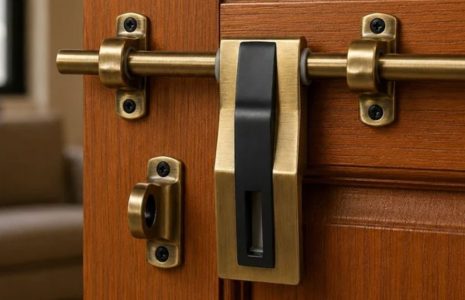
Every time someone in your house pushes a door shut and it clicks, a mortice latch has done its job. Nobody notices it. Nobody thanks it. Until the day it stops catching and the bedroom door swings open every time the ceiling fan is switched on.
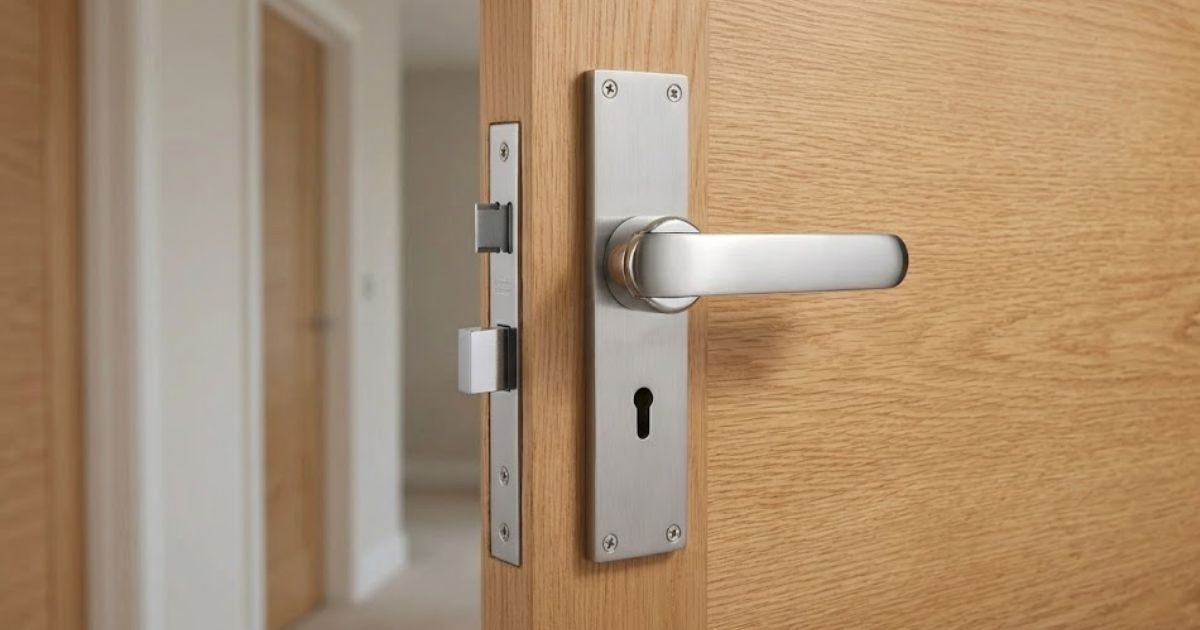
That small, slanted tongue on the edge of the door is worth a few minutes of thought, especially if you are building or renovating.
Latch and lock are not the same thing
People use the words interchangeably at the hardware shop, but they mean different things. A mortice latch holds the door closed. You turn the handle, the latch slides back, the door opens. There is no key.
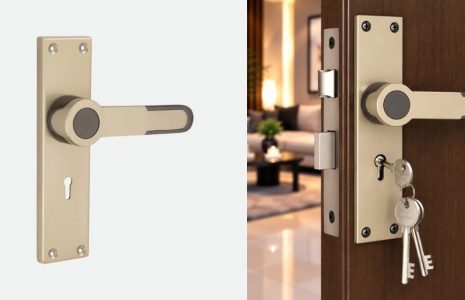
A mortice lock adds a bolt that you throw with a key or a thumb turn, so the door stays shut even if someone turns the handle. Many lock bodies combine both, a latch for daily use and a bolt for security, inside one case that sits in a pocket cut into the door edge.
The spelling also varies. Mortice and mortise refer to the same thing. The pocket cut into the door is the mortise, and the hardware that sits inside it takes the name.
Where a latch alone is the right choice
Not every door needs a key. Think about how your home actually works. The kitchen door, the dining room door, the door to the study, the passage between two rooms. These need to stay shut against draughts, pets and toddlers, but locking them would only create problems.
A simple mortice latch with a pair of handles is perfect here. It is quieter than a lock body, cheaper, and there is no key to lose. For bedrooms, many families like a latch with a privacy bolt or a thumb turn on the inside, which gives a little privacy without any keys floating around the house.

What separates a good mortice latch from a cheap one
Open the box and look at the case. A good latch has a solid, neatly finished case with no rough edges, because the case is what takes the strain when the door slams in a gust of wind.
Push the latch tongue in with your thumb several times. It should move smoothly and spring back firmly every time. A weak spring is the most common reason a latch stops catching after a year.
Check the strike plate, the metal piece fixed to the frame. It should be sturdy and come with screws long enough to bite into the frame properly. A flimsy strike plate bends, and then even a perfect latch will not hold.
Getting the size and fit right
The backset, which is the distance from the door edge to the centre of the handle, decides how far the handle sits from the frame. Too short and you scrape your knuckles every time you open the door. Tell your carpenter which latch you are using before the door is cut, not after.
Make sure the latch suits the thickness of your door. Indian interior doors vary a lot, and a latch made for a thick solid door will not sit properly in a slim flush door.
Pairing the latch with handles
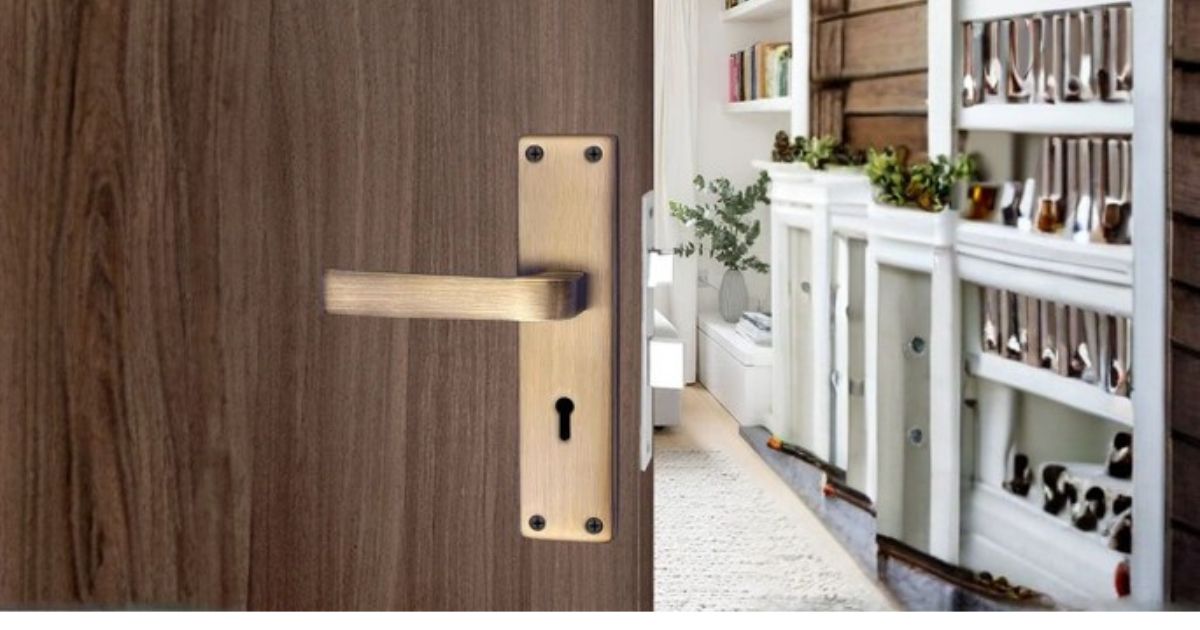
A mortice latch works with a pair of mortise handles, either on a long plate or on round rose bases. The handle you choose changes the whole look of the door, so this is where you can have some fun with finishes. A satin steel handle feels modern, an antique brass handle feels warm and traditional, and a black finish makes a strong statement on a light door.
Small care, long life
Once a year, spray a little dry lubricant into the latch and work the handle a few times. Tighten the handle screws if they feel loose. That is all it takes to keep a good latch clicking for a decade.
Also read
Talk to Atom Locks
Atom Locks makes mortise latches, lock bodies and mortise handles for homes, offices and projects across India. See the Bolts and Latches and Handles ranges at https://www.atomlocks.com/ or raise a Bulk Query for your site. Call +91 9412273735 or email sa***@*******ks.com.